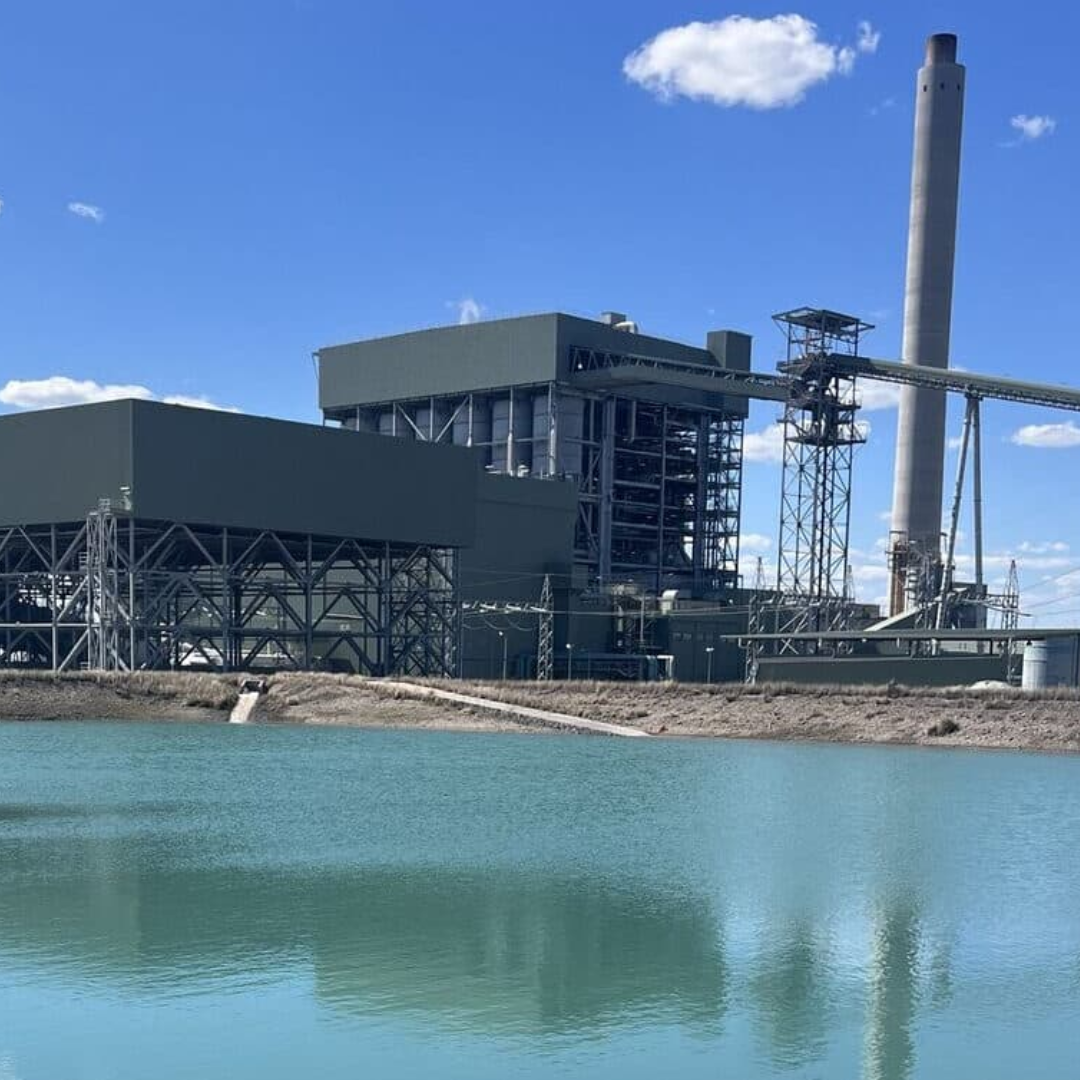
Most operators think of cooling-tower blowdown as a cost to be managed — a waste stream to bleed off, pay trade-waste on, and forget. That instinct is understandable, and it is also where a real opportunity goes unnoticed. The water you are discharging is, counter-intuitively, the most valuable water on your site to recover. For data centres watching water usage effectiveness (WUE) climb up the planning agenda, cooling tower blowdown treatment is one of the few levers that moves the number without touching the IT load.
Why blowdown exists in the first place
A cooling tower works by evaporation. As water evaporates to shed heat, the dissolved solids it leaves behind stay in the loop and concentrate. Left unchecked, that rising concentration scales heat-exchange surfaces, drives corrosion, and feeds biological growth. To hold the chemistry in a safe band, operators bleed off a portion of the circulating water — the blowdown — and replace it with fresh make-up water.
The ratio of how concentrated the loop runs before bleeding is the cycles of concentration. Run more cycles and you discharge less, but the water gets harder to manage. Run fewer and you stay comfortable, but you waste more water and more of the chemicals you have already paid to dose. Either way, blowdown is the release valve — and every litre of it is replaced by a litre of make-up.
The counter-intuitive part
Here is the insight most sites miss. Because blowdown is the concentrated stream, it carries the dissolved solids, suspended matter, and treatment chemistry from the entire loop in a comparatively small volume. That makes it the highest-strength water you discharge — and, precisely for that reason, the highest-value water to recover.
Treating the stream everyone wants to get rid of is the fastest way to cut the water nobody notices: make-up.
Make-up water is the quiet giant in a data centre's water account. It is the bulk of on-site consumption and the bulk of the numerator in your WUE ratio. If you can treat blowdown to a quality that lets it return to the tower instead of going down the drain, you cut make-up draw directly. The ratio improves while compute — the denominator — stays exactly the same.
Why blowdown is hard to treat conventionally
If recovering blowdown were easy, everyone would already do it. The difficulty is that blowdown is genuinely awkward feed: variable chemistry that shifts with weather and load, suspended solids, hardness on the edge of scaling, and a live biological burden. Conventional fixed membranes hate exactly these conditions. They foul, they scale, they need aggressive cleaning, and their consumable elements wear out and land back in the cost column. That fragility is why so many sites conclude recovery "isn't worth it" and keep paying to discharge.
This is the specific problem dynamic-membrane filtration was built to solve.
How dynamic-membrane treatment changes the maths
The Purus platform is a dynamic pre-coat membrane system designed to recover difficult industrial water on site. Instead of relying on a fixed, factory-made membrane, it forms a fine separating layer in service and renews it through backwash — a regenerable gel layer that resists the fouling and scaling that defeat conventional membranes on messy feed like blowdown.
A single vessel runs a configurable stack of five filter elements — 20, 10, 5 and 3 micron stages down to an approximately 10 nanometre gel layer — so one architecture spans coarse clean-up through to fine polishing, including up to 6-log microbial reduction to handle the loop's biological load. It does this at low operating pressure and with low chemical use, in a compact skid roughly 2 × 2 × 2 m, in models scaling from the 20.1 through the 50.2, 100.5 and 100.20. Performance is application-dependent and open to site-specific verification on request.
The relevance to blowdown is direct. As a platform capability, dynamic-membrane recovery offers a confirmed pathway to 77%+ water recovery on suitable streams — meaning the bulk of what you currently discharge could be returned to the loop rather than replaced from mains. That figure is a demonstrated platform capability, not a guaranteed cooling-water result for any given site; Blue Quest is piloting the approach on real cooling water at a major Brisbane data centre to put a site-specific number behind it. The honest way to size the prize on your own loop is a short trial on your actual blowdown, with results verified site-specifically on request.
The double dividend
Recovering blowdown pays twice. On the way in, less make-up water means a lower numerator in WUE and a smaller draw on a resource that is increasingly an approval-and-reputation issue, not just an operating cost. On the way out, a smaller discharge volume means less trade-waste — lower volumetric charges and, often, fewer compliance headaches, since the water leaving site is both less and cleaner.
For a new build, the same logic reads as risk reduction: a credible on-site reuse plan for blowdown is exactly the kind of evidence planners and communities now look for. For an existing site, it is a retrofit that targets the most concentrated, most expensive water you have — the discharge you were treating as a problem.
Where to start
You do not need to commit to a permanent install to find out whether the numbers work. Start by characterising your blowdown — its chemistry, its volume, its variability across a normal operating cycle. Pilot dynamic-membrane treatment on that real water, confirm the recovery you can sustain, and only then decide on a fixed skid sized to your loop. The discharge you have been paying to lose is the obvious place to begin.
What is cooling tower blowdown treatment?
It is the process of treating the concentrated water bled off a cooling tower so it can be returned to the loop instead of discharged. Because blowdown carries the dissolved solids, suspended matter and chemistry of the whole loop in a small volume, treating it recovers usable water and cuts the make-up you draw from mains.
Why treat blowdown rather than make-up water?
Blowdown is the most concentrated — and therefore highest-value — stream on site, so recovering it returns the most water for the effort. Treating it directly reduces make-up demand, which is the bulk of on-site water consumption and the main driver of a data centre's WUE.
Can dynamic-membrane filtration handle variable blowdown chemistry?
That is its core strength. The Purus platform forms a regenerable gel layer renewed by backwash rather than relying on a fixed membrane, so it tolerates the shifting chemistry, suspended solids and biological load that foul conventional systems. Actual recovery for your stream is confirmed by a trial on your real water, with site-specific verification on request.
Model your numbers.
See what a Purus configuration does for your throughput, water quality and OPEX — then talk it through with the engineering team. Performance figures are indicative; site-specific verification on request.