The technology
How a dynamic-membrane platform delivers membrane-grade water quality at industrial throughput. Concept-level, customer-engineer view — not a marketing pitch and not a technical specification.
For decades, industrial water filtration sat on a single trade-off. Coarse cartridge or sand filtration delivered high throughput at low cost — but removed only large particulates. Membrane filtration delivered virus-grade water quality at any scale — but at the capital, energy and consumables cost that membranes traditionally bring.
Pick one and you compromised on the other. There was no platform that gave you both at meaningful scale.
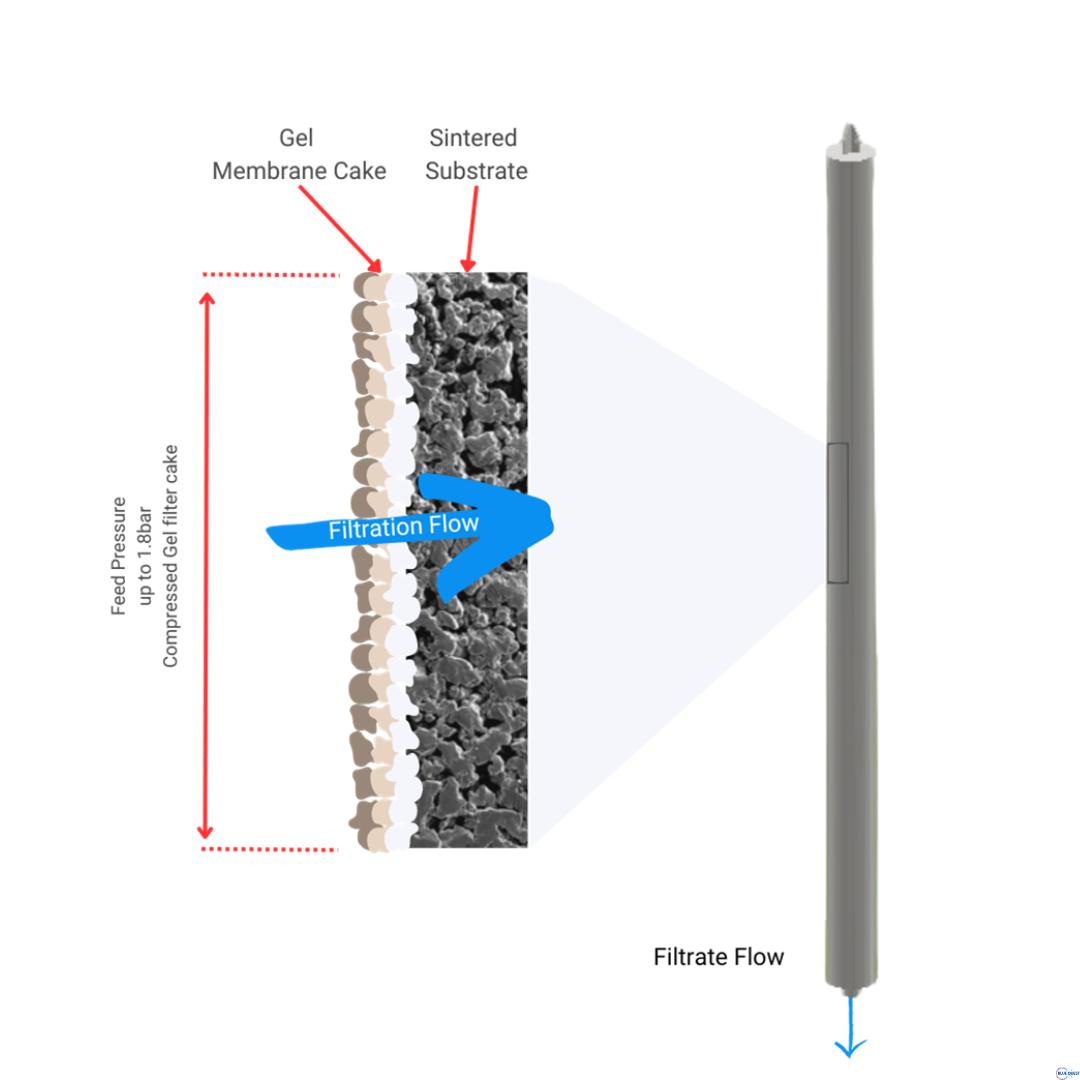
Purus uses a dynamic-membrane filtration platform. Rather than the passive, mechanical removal of traditional cartridges, the membrane configuration in a Purus vessel is regenerated continuously through controlled operation. The membrane layer is restored by backwash rather than discarded and replaced.
That changes the operating economics. Consumables are no longer the dominant cost — pumping energy is. And because the membrane regenerates rather than degrades in service, the throughput curve stays flat where a cartridge stack would steadily decline as it fouled.
The chemistry behind the dynamic membrane was invented at one of Queensland’s leading universities, published in Nature, and is now exclusively licensed to Blue Quest Group. The vessel platform around it is patent-pending.
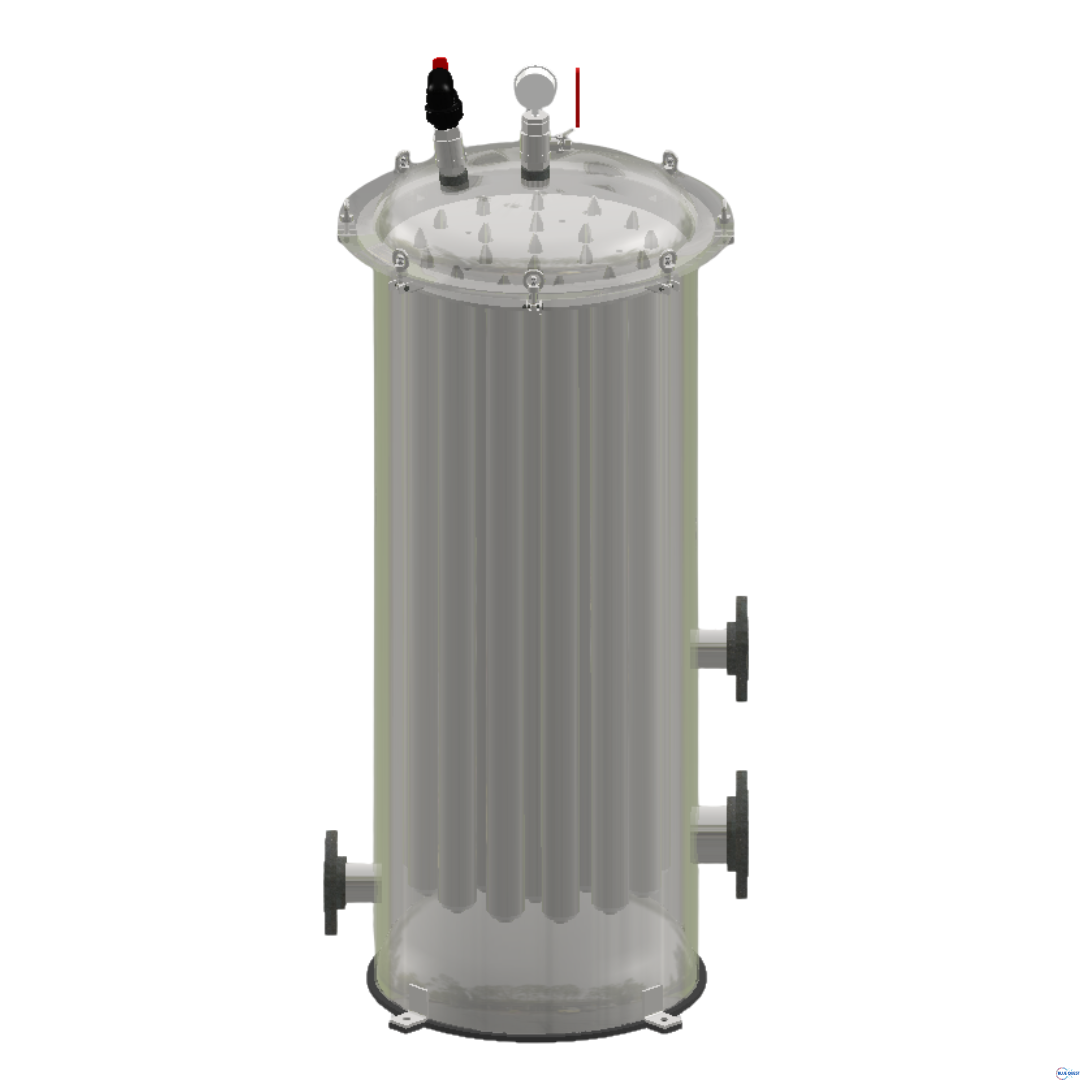
Each Purus vessel houses up to 30 filter elements arranged for consistent flow distribution — manifolds in, element array, manifolds out. The assembly stays constant across the model range. The elements you pick change; the vessel does not.
Each Purus vessel runs the same operating cycle, regardless of model size. Raw water in at one end, filtered water out the other, with periodic backwash regeneration in between.
The clearest way to explain a dynamic membrane is to watch it regenerate. Step 5 of the flow above — the backwash cycle — is what this footage shows for the gel element.
Early prototype footage. Recorded during R&D development and shown here for clarity on the backwash mechanic. The operating principle is unchanged in production; vessel hardware, controls and finish have been refined since this recording.
Gel-element backwash sequence — early prototype
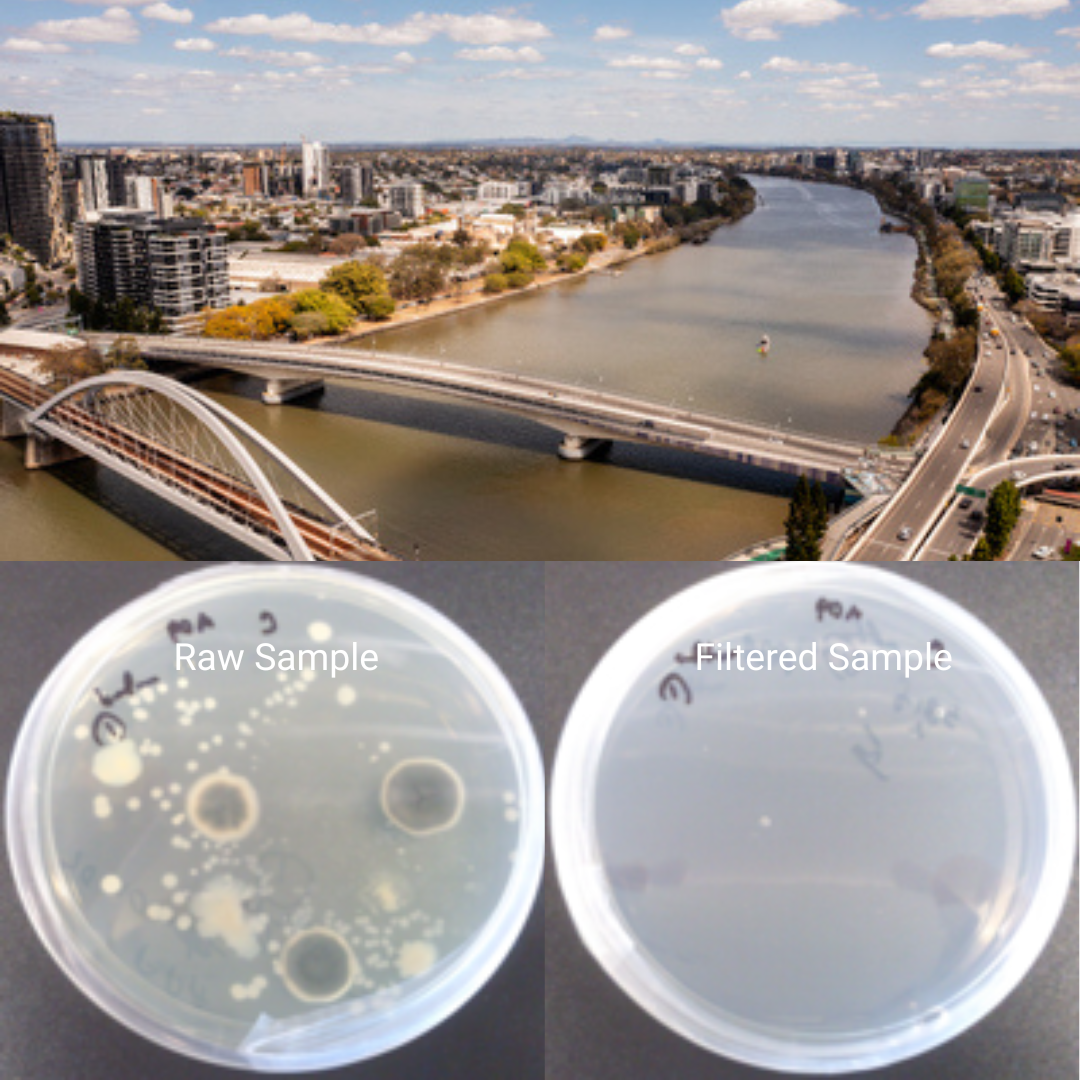
Side-by-side samples drawn from the same feed before and after Purus filtration. Raw river water on the left; clarified output on the right — same vessel, same operating day.
Every Purus vessel takes any of five filter elements. Coarser elements push more volume with less removal; the gel-membrane configuration removes everything down to virus scale. The right choice depends on your site water and your operating goal.
Highest throughput, lowest pressure drop. Pre-filtration and high-volume duties.
Strong flow with broader particulate removal. General process water.
Clarification-grade. Common for drinking-water pre-treatment.
Finer removal — most bacteria and cysts at solid throughput.
Virus-grade removal (6 log). Regenerable, lowest long-term OPEX.
Want to model the trade-off for your site? Run your inputs through the Filter Builder — pick an element, set duty cycle and economics, and see flow, daily output, water quality and the annual return live.
Headline anchors for the platform. Detailed trial data and site-specific performance figures are available on request through contact.
The technology only matters if it works for your site water and your operating context. The Filter Builder lets you plug in your numbers and see the platform on your terms.