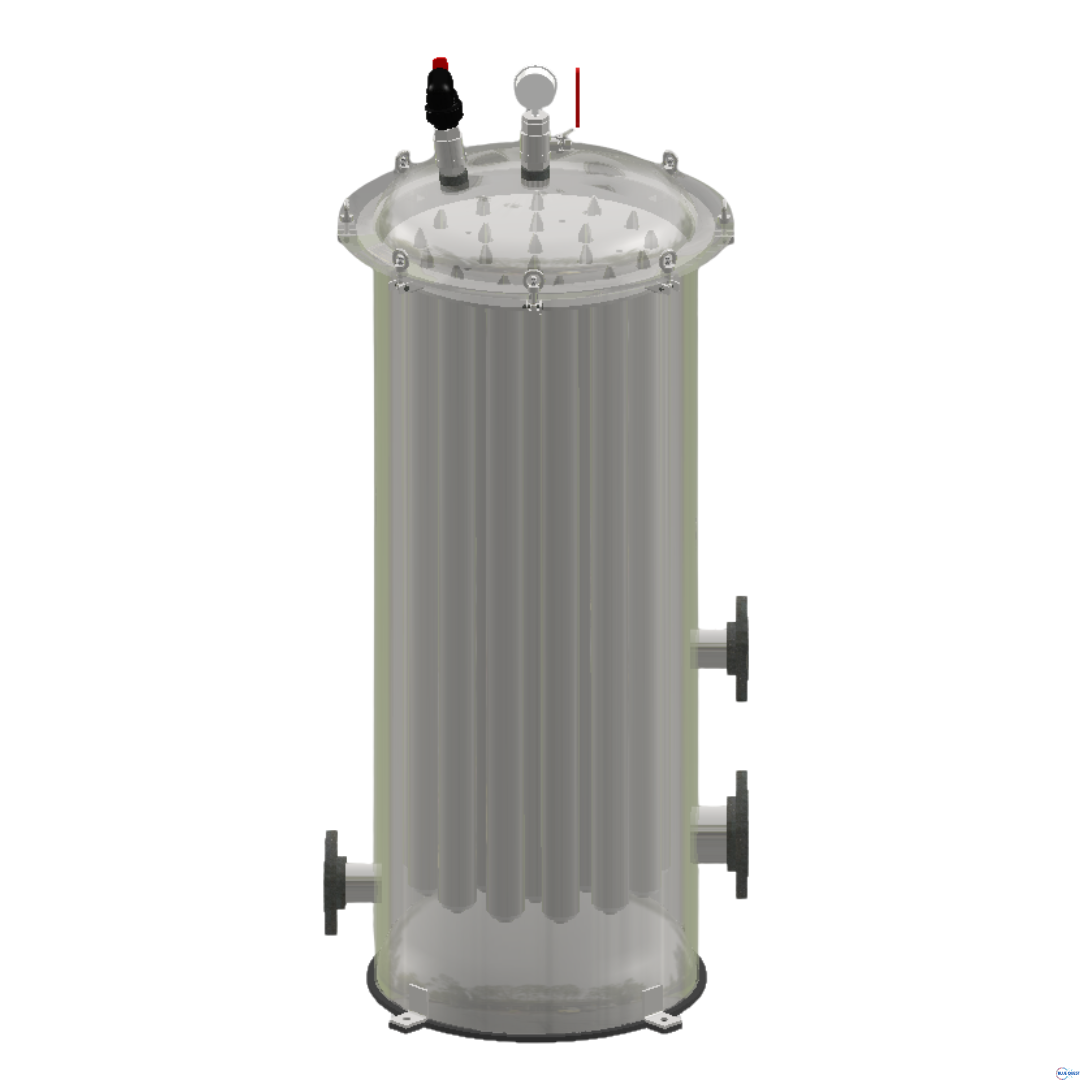
"Dynamic membrane" is one of those phrases that sounds like marketing until you watch one work. Strip away the jargon and the idea is almost old-fashioned: instead of relying on a fixed, factory-made membrane to do all the separating, you let the filtration layer form on the spot — and then renew it whenever it tires. That single shift changes the economics of clean water at industrial scale.
This is the plain-English version. What the technology actually is, how it differs from the filters you already know, and the trade-offs you control when you put it on site.
The problem with the filters you already know
Most industrial filtration sits in one of two camps, and each makes you pay for quality in a different currency.
Cartridge and bag filters are cheap to buy and simple to run, but they are consumables. The finer the rating, the more they remove — and the faster they blind off, the more often you swap them, and the more waste and downtime you carry. Quality is bought in replacements.
Conventional membranes — ultrafiltration and reverse osmosis — deliver superb water, but the membrane is a precision-manufactured surface. It fouls, it needs careful chemical cleaning, and eventually it is replaced at significant cost. Quality is bought in pressure, chemicals and membrane life.
Both work. Both are well understood. But in both, the separating layer is something you buy, install, consume and discard.
The core idea: let the membrane form, then renew it
A dynamic membrane flips that around. Rather than starting with a finished membrane, the system builds a thin separating layer in service on a supporting surface inside the vessel. Feed water flows in, the active layer does the separation, and clean water passes through.
The key property is that the layer is regenerable. When it has done its work and performance starts to drift, the system clears it and re-forms a fresh one — typically through a backwash cycle — rather than asking an operator to pull and replace a spent element.
The separating layer stops being a consumable you discard, and becomes a working surface you maintain.
That is the whole game. You are no longer trying to make a membrane last as long as possible before binning it. You are running a layer you can refresh on a schedule that suits your duty.
How Purus puts this to work
The Purus platform is a dynamic-membrane system built around a modular vessel. Every vessel — whatever the model size — runs the same operating cycle:
- Raw water enters via a dedicated pump set.
- Flow passes through the chosen filter element, from coarse micron ratings through to the gel configuration.
- The active layer captures contaminants while regenerating in service.
- Filtered water exits to the downstream process or storage.
- A periodic backwash restores the layer; in multi-vessel installations this runs one vessel at a time, so total system uptime is maintained.
- On gel-element installations, the system automatically replenishes the gel layer.
The chemistry behind the gel configuration was developed at a leading Queensland university and is now exclusively licensed to Blue Quest. The vessel platform that turns that chemistry into a deployable unit is patent-pending.
One platform, a spectrum of duties
Because the element is a choice rather than a fixed property of the vessel, one architecture covers a wide span of jobs. Coarser elements trade some removal for higher throughput at the same footprint; the gel configuration targets the most demanding water-quality outcomes. The vessel, the controls and the maintenance philosophy stay the same — you size the unit to throughput and pick the element to the water-quality target.
Where dynamic-membrane filtration earns its keep
It is not magic, and it is not the right answer for every stream. But it tends to shine in a few recognisable situations:
- High-throughput duties where consumable filtration hurts. If you are swapping cartridges often, the regenerable layer attacks the part of the bill that actually grows with use.
- Variable or difficult feed water. Dams, bores, process water and recycled streams where load swings around.
- Sites that value uptime. Sequential backwash in multi-vessel set-ups keeps production going while a single vessel regenerates.
- Quality targets that sit above bag filters but where you want to avoid full RO complexity for the duty in question.
A sensible rule: the more your current method spends on consumables and downtime rather than energy, the more interesting a dynamic membrane becomes.
A note on performance figures
You will see throughput, removal and service-interval numbers quoted across this site and in the Filter Builder. Treat them as indicative. Real feed water is messy and site-specific — TSS, particle-size distribution, temperature and duty cycle all move the result. Every figure we publish is open to site-specific verification on request, and a short trial is the honest way to land on numbers you can design to. That is exactly how the validated trial data on our case studies page was produced.
Is a dynamic membrane the same as ultrafiltration or RO?
No. Ultrafiltration and reverse osmosis use fixed, precision-manufactured membranes. A dynamic membrane forms its separating layer in service on a supporting surface and regenerates it through backwash, rather than relying on a single permanent membrane that is eventually replaced.
Does the filtration layer get thrown away like a cartridge?
No — that is the central difference. The layer is renewed in service through the backwash cycle rather than removed and discarded. Coarser micron elements are replaceable when needed, but the operating philosophy is regeneration, not consumption.
What water quality can it achieve?
It depends on the element selected. The platform spans coarse micron ratings through to the gel configuration, which targets the most demanding water-quality outcomes. Because element choice is independent of the vessel, one unit can be tuned across a wide range of duties.
How do I know it will work on my water?
Bench and site context get you an indicative answer; a short on-site trial gets you numbers you can design to. Performance is site-specific, so we verify against your actual feed water rather than asking you to take a datasheet on faith.
Model your numbers.
See what a Purus configuration does for your throughput, water quality and OPEX — then talk it through with the engineering team. Performance figures are indicative; site-specific verification on request.